
Attic Ventilation and Insulation in Murray UT: Building Science Solutions
A durable, long lasting roof relies on what happens beneath the shingles just as much as the outer waterproofing layer. In Murray, Utah, extreme seasonal temperature swings make attic building science critical to structural longevity. An unventilated attic in July easily surpasses one hundred fifty degrees Fahrenheit, baking shingles from below and driving air conditioning energy costs skyward. In January, escaping household warmth melts heavy snowpack, creating catastrophic ice dams along exterior gutters. At Wasatch Peak Roofing, we connect property owners with experienced building envelope specialists who optimize intake and exhaust airflow and install premium thermal insulation.
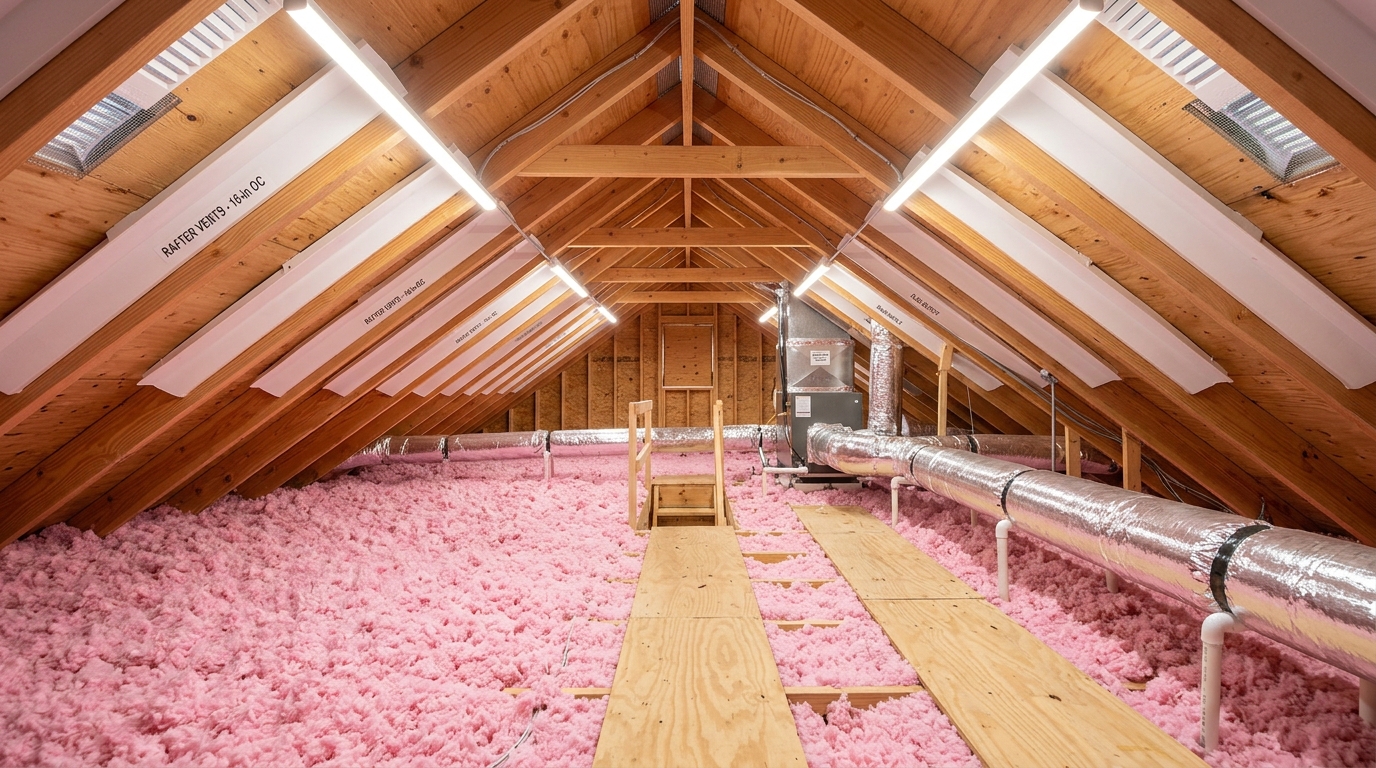
The Fundamental Mechanics of Balanced Attic Airflow
Proper attic airflow operates on the passive stack effect. Cool, dense outside air enters continuously through low perimeter intake soffits situated under eaves. As this air absorbs radiant heat rising from living areas, it naturally expands and rises through the attic space, expelling hot air and moisture continuously through elevated ridge vents along the roof peak.
Guidelines published by the National Roofing Contractors Association specify that effective ventilation requires a strictly balanced system. If an attic features ridge vents without corresponding open soffit intakes, negative air pressure draws conditioned indoor air from living spaces through recessed lighting cans and ceiling bypasses, wasting energy and accelerating condensation.
Eradicating Destructive Winter Ice Dams
Ice dams represent one of the most destructive winter threats to Murray residences. When an attic lacks sufficient thermal resistance or has blocked soffit vents, heat escaping from the home warms the upper roof deck above thirty two degrees. Snowpack covering the upper roof melts, and water runs down the slope until it reaches the cold, unheated eave overhangs, where it instantly freezes into thick ice ledges.
As meltwater continues accumulating behind this solid ice barrier, water backs up beneath shingles and penetrates wood sheathing. Read our comprehensive field guide on preventing winter ice dams in Utah to understand how combining adequate R value insulation with clear baffles keeps roof deck temperatures uniform from ridge to eave, eliminating ice dam formation permanently.
Utah Climate Zone Five Insulation Standards
Technical guidance from the US Department of Energy places Salt Lake County in Climate Zone 5, recommending an attic insulation level of R38 to R60. Many older Murray homes constructed in the 1960s and 1970s contain only four to six inches of settled fiberglass batts, providing a meager R13 to R19 rating.
Upgrading to blown fiberglass or virgin cellulose to achieve an R49 or R60 barrier offers immediate advantages:
- Drastic Energy Savings: Reduces household heating and cooling loads by up to twenty five percent annually.
- Thermal Comfort: Eliminates uncomfortable winter ceiling drafts and uneven room temperatures.
- Shingle Life Extension: Prevents premature thermal degradation and shingle blistering caused by trapped attic superheat. Review our checklist on signs you need a roof replacement to see how heat blistered shingles fail before their warranty expires.
Attic Ventilation Components Comparison
Contractors in our roofing company evaluate each home geometry to select the ideal intake and exhaust pairing:
| Ventilation Component | Location | Functionality | Performance in Murray Climate |
|---|---|---|---|
| Continuous Ridge Vent | Roof Peak | Passive exhaust along full length | Outstanding, self cleaning, low profile |
| Vented Soffit Panels | Eave Overhangs | Continuous cool air intake | Essential foundation for passive airflow |
| Rafter Vent Chutes (Baffles) | Truss Eave Corners | Prevents insulation from choking soffits | Mandatory for preventing ice dams |
| Static Box Vents (Turtle Vents) | Upper Slope | Point source passive exhaust | Prone to snow cover during heavy Wasatch blizzards |
| Powered Attic Ventilators | Gable or Roof | Motorized mechanical exhaust | Can depressurize attic if intake is inadequate |
Serving Murray Residential Neighborhoods
Homes located throughout master planned communities like Village Gardens benefit immensely from integrated attic ventilation upgrades during complete roof replacements. our repair crews coordinate baffle placement and insulation blow in seamlessly alongside high wind asphalt shingle roofing installations.
If you are experiencing chronic winter ice buildup, active condensation dripping from attic nail tips, or skyrocketing summer electricity bills, schedule a professional roof inspection and certification. Our network technicians measure attic temperature differentials and calculate precise net free airflow areas to restore your home thermal balance.
Frequently Asked Questions About Attic Ventilation in Murray
Current energy codes for Climate Zone 5 along the Wasatch Front specify attic insulation levels between R38 and R60, which equates to roughly thirteen to twenty inches of blown fiberglass or cellulose insulation.
When heat escapes from living areas into poorly insulated attics without sufficient ventilation, the upper roof deck warms and melts snowpack. Runoff flows down to cold unheated eaves and freezes solid, backing liquid water up under shingles.
Building codes require a one to three hundred ratio of net free ventilating area, divided equally fifty fifty between continuous low intake soffits and continuous high exhaust ridge vents.
No. Adding exhaust vents without corresponding open soffit intake creates negative attic air pressure, pulling conditioned warm, moist air directly from the living space into the attic cavity and worsening moisture accumulation.